
Best Omnisphere Alternatives

Almost nobody uses all of Omnisphere. Most people use one of the three things it does, pay for the other two, and give up sixty gigabytes for the privilege. Naming which third you use makes this an easy decision.

The ModWheel Team
By The ModWheel Team Editorial Staff

ModWheel is reader-supported. When you buy through links on this page we may earn an affiliate commission, at no extra cost to you. This never influences which products we recommend, read our testing methodology.

Prices come from the store's own feed and were last checked 27 September 2026. We don't issue discount codes — the price you see is the store's own.

Pick one in 10 seconds

Short version
  • You open Omnisphere to browse finished textures and rarely edit them Thousands of curated presets and a browser built for exactly that habit. Analog Lab Pro
  • You want the synthesis depth without the sample library Four engines, the clearest modulation display in software, 199 dollars. Pigments 7
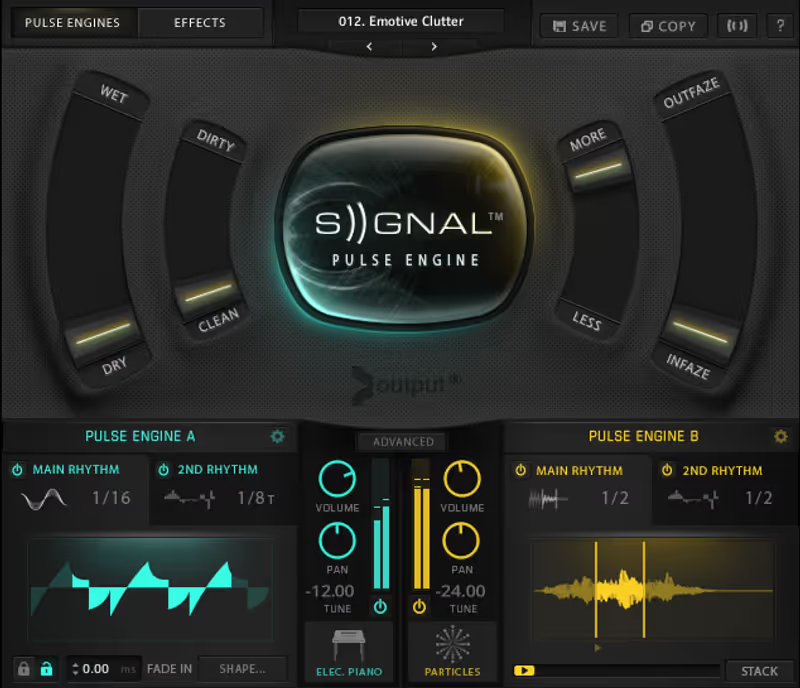
  • You use it for tension beds and evolving pads under picture Pulse-driven motion is the one thing it does, and it does it in seconds. Signal
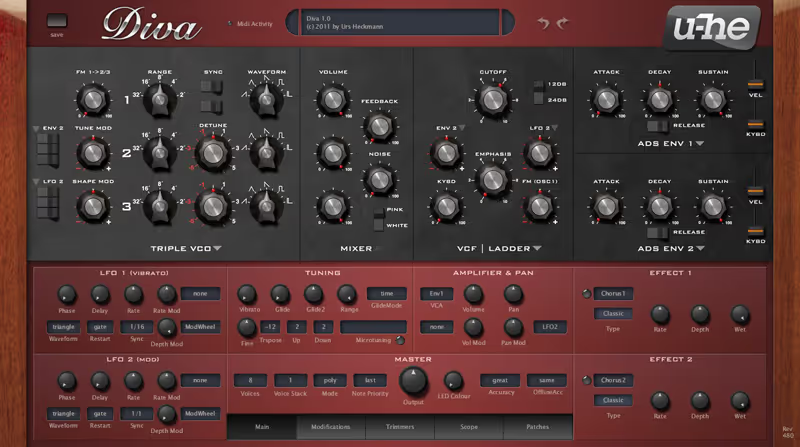
  • You want analogue character rather than digital breadth The best analogue emulation available, at a real CPU cost. Diva
  • Your template is already heavy and the synth cannot be Lightest here by a wide margin, and quick to programme. Hive 2

Compare all 5

Type
Multi-engine synth
Footprint
Megabytes
Type
Preset player
Footprint
Gigabytes
Signal 7.1
Type
Pulse-driven hybrid
Footprint
Gigabytes
Diva
4. Diva u-he #4 bestseller at Plugin Boutique
7.6
Type
Virtual analogue
Footprint
Megabytes
Hive 2 7.9
Type
Wavetable and analogue
Footprint
Megabytes

Omnisphere is really three instruments sharing a browser. It is an enormous library of finished cinematic textures, a very deep synthesiser underneath them, and a sampled palette of unusual sources. Each of those has a cheaper and considerably smaller specialist.

So the question is not what replaces Omnisphere. It is which third you open it for. Somebody hunting finished beds wants a different answer from somebody building patches from an oscillator, and paying full price for both is what the sixty gigabytes are actually for.

Nothing here was tested in a studio and every card says so. The scores come from published specification and documented behaviour, and the verdicts agree with what this site has already said about these instruments elsewhere.

Best Cinematic Synths (2026): Hybrid Scoring & Sound Design covers the same field without the Omnisphere framing.

Top Picks

01 Arturia Best Overall

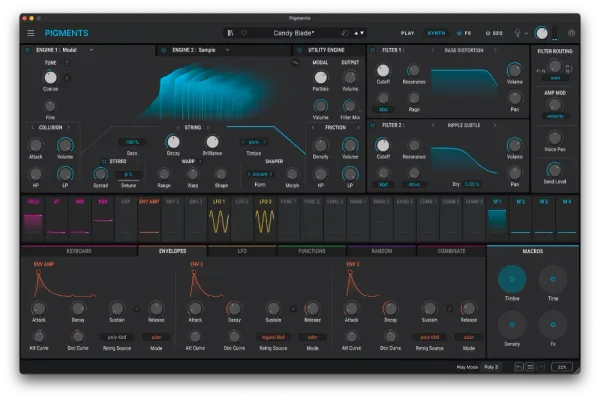
Pigments 7

Best for Deep Synthesis

Not tested by us, assessed from specs and documented behaviour

The right answer if what you use Omnisphere for is building sounds rather than finding them. Four engines and the most legible modulation in software, at 199 dollars and a footprint measured in megabytes.

Assessed score
8.1
out of 10

How it scored

  • Sound Match 8.5

    Covers Omnisphere's synthesis territory, though not its sampled palette.

  • Preset Breadth 7.0

    A good library rather than an overwhelming one, which is the trade.

  • Footprint 9.0

    Megabytes against sixty gigabytes, and it loads immediately.

  • Value 8.0

    Roughly a third of the price for the half most people actually use.

Why we picked it

Best for composers who build patches from scratch and want Omnisphere's depth without its library or its disk footprint.

Who should skip it

Skip it if you open Omnisphere to browse rather than to build, because the preset breadth is where the gap is.

The good

  • Four engines, one instrument
  • Clearest modulation display anywhere
  • Loads in seconds

The bad

  • No comparable sample library
  • Interface animation costs CPU
  • Presets lean cinematic
Type
Multi-engine synth
Footprint
Megabytes
Price
$199
Why it scored that way

The synthesis half of Omnisphere, for a fifth of the disk.

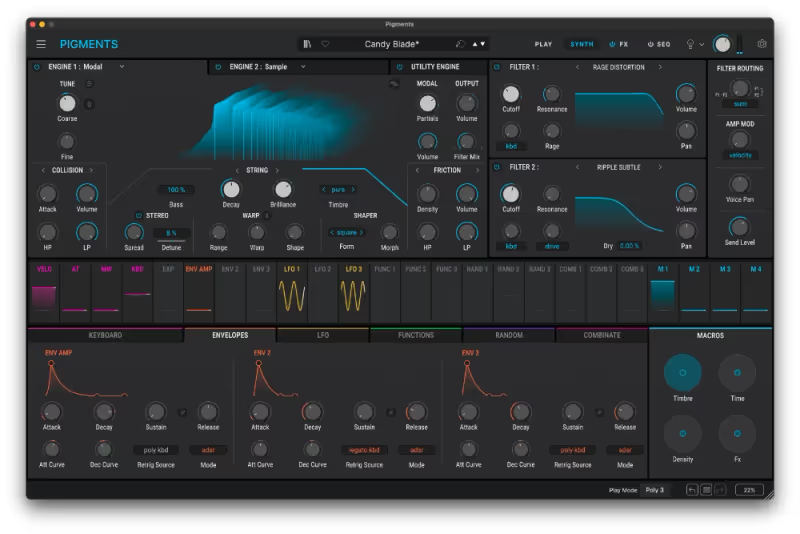
If you open Omnisphere to make a sound rather than to find one, Pigments is the straight substitution and the saving is not marginal. Four synthesis engines sit behind an interface that draws every modulation routing while it moves, which is more legible than Omnisphere's own and is the reason this instrument gets recommended to people who found Omnisphere opaque.

What it does not have is the sampled palette. Omnisphere's sound sources include recordings of objects nobody else thought to record, and that breadth is genuinely unmatched. Pigments has a sample engine and you can load your own material into it, which is not the same as inheriting a library somebody spent a decade assembling.

The friction is documented and worth knowing before purchase. Arturia's interface is animated rather than static, and on a complex patch the CPU cost is substantially the drawing rather than the audio. On a loaded orchestral template that is a real number, and it is why Hive 2 appears further down this page.

Playing connects you to YouTube, which may set cookies.
Heard on
Hybrid Scoring Trailer Sound Design Game Audio
Check price $199
02 Arturia

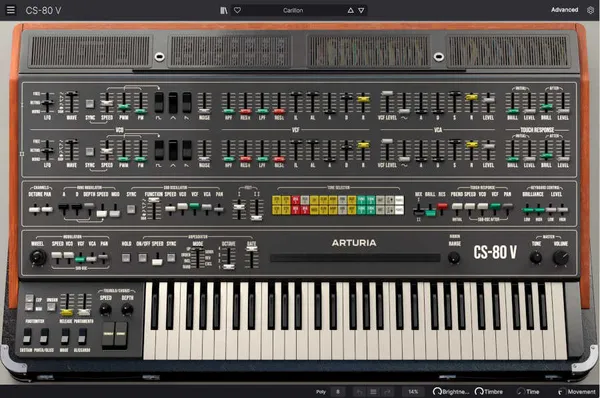
Analog Lab Pro

Best for Fast Sketching

Not tested by us, assessed from specs and documented behaviour

The honest answer for the large group who open Omnisphere, type a mood into the search box and take the third result. It is a sketching tool rather than a synth, and that is the correct description of how most people use the thing it replaces.

Assessed score
8.1
out of 10

How it scored

  • Sound Match 7.5

    Vintage modelled instruments rather than Omnisphere's sampled oddities.

  • Preset Breadth 9.2

    Thousands of curated sounds and a browser designed for finding them.

  • Footprint 8.0

    Far smaller than Omnisphere, though not trivial.

  • Value 7.5

    Full price, and it upgrades into the wider Arturia collection.

Why we picked it

Best for composers who use Omnisphere as a preset browser and want that habit served properly at sketching speed.

Who should skip it

Skip it if you edit deeply, because this is a player over other instruments rather than a synthesiser.

The good

  • Browser built for finding sounds
  • Thousands of curated presets
  • Upgrades into full instruments

The bad

  • Not a synth to edit
  • Warmer, less digital palette
  • Full price for a player
Type
Preset player
Footprint
Gigabytes
Price
$199
Why it scored that way

The browsing half of Omnisphere, at sketching speed.

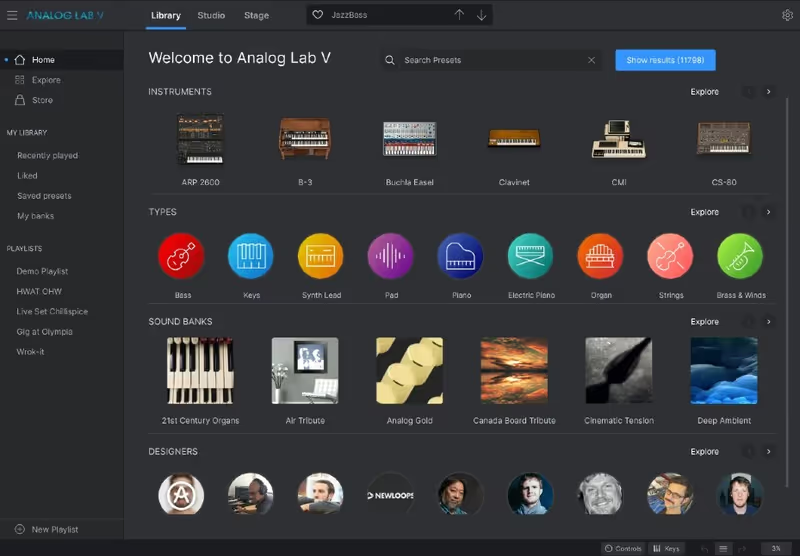
This is the recommendation nobody makes and most people need. A large share of Omnisphere owners use it as a very expensive preset browser: open it, describe the mood, audition until something fits, move on. Analog Lab is built for exactly that loop and makes no pretence of being anything else.

The character is different and the difference matters. Omnisphere's palette leans digital, sampled and strange. Analog Lab draws on modelled vintage hardware, so the library is warmer and more familiar, which suits some writing and not other writing. It is not a like-for-like tonal swap and this page would be lying to suggest otherwise.

What makes it a good purchase rather than a compromise is the upgrade path. Every preset is a reduced view of a full Arturia instrument, so when a sound turns out to matter you can buy the synth behind it and keep working. Omnisphere has no equivalent of that, because there is nothing underneath it to buy.

Playing connects you to YouTube, which may set cookies.
Heard on
Sketching TV Underscore Songwriting
Check price $199
03 Output

Signal

Best for Motion Beds

Not tested by us, assessed from specs and documented behaviour

If Omnisphere is where you go for pulsing, evolving motion under picture, this reaches the same result faster and does nothing else at all. That narrowness is the entire recommendation.

Assessed score
7.1
out of 10

How it scored

  • Sound Match 7.0

    Covers one Omnisphere use case closely and ignores the rest.

  • Preset Breadth 7.5

    Deep in its own lane, empty outside it.

  • Footprint 7.0

    Substantial for what it does, small against sixty gigabytes.

  • Value 7.0

    Full price for a single-purpose instrument, justified only if that is your purpose.

Why we picked it

Best for composers scoring to picture who mainly want pulsing, evolving motion beds and want them quickly.

Who should skip it

Skip it as a general synth, because leads, basses and clean pads are not what it is built for.

The good

  • Reaches motion beds fast
  • Macro control moves everything
  • Purpose-built for picture

The bad

  • Narrow outside its lane
  • Weak on leads and basses
  • Full price for one job
Type
Pulse-driven hybrid
Footprint
Gigabytes
Price
$199
Why it scored that way

The tension beds, without the other fifty-nine gigabytes.

Signal exists for one job, which is rhythmic motion underneath a cue: pulsing beds, evolving textures, and the sound of something building without anything obviously happening on the surface. Composers writing to picture reach for that constantly, and a good number of them currently open a sixty-gigabyte instrument to get it, which is the habit this page is about.

Getting there is faster here because the instrument assumes it is what you want. Two layers, a pulse engine on each, and a macro page that moves them together. On Omnisphere the same result exists but it is one of several thousand possibilities you have to find first, and the browsing is the time cost nobody counts.

The obvious caveat is that this replaces a slice rather than an instrument. Ask it for a lead, a bass or a clean pad and it will do a worse job than a two hundred dollar general synth. Buy it as a specialist alongside something else, not as a one-for-one substitution.

Playing connects you to YouTube, which may set cookies.
Heard on
Trailer Sound Design TV Underscore Game Audio
Check price $199
04 u-he

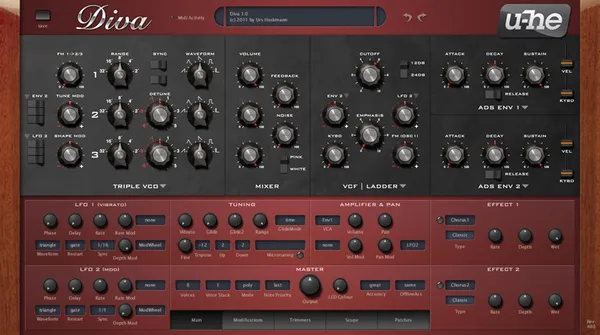
Diva

Best for Analogue Pads

Not tested by us, assessed from specs and documented behaviour

#4 bestseller at Plugin Boutique

Not a replacement so much as the other direction. Where Omnisphere is broad and digital, this is narrow and analogue, and it is the better instrument for anything that has to sound played rather than programmed.

Assessed score
7.6
out of 10

How it scored

  • Sound Match 6.0

    Deliberately unlike Omnisphere. Analogue character rather than digital breadth.

  • Preset Breadth 6.5

    A focused library. You are buying the engine, not the collection.

  • Footprint 9.5

    Tiny on disk. The cost is CPU rather than storage.

  • Value 8.5

    119 dollars for the reference analogue emulation.

Why we picked it

Best for composers who found Omnisphere too digital and want genuine analogue character for pads and leads.

Who should skip it

Skip it if breadth is what you valued, because this is one narrow instrument done extremely well.

The good

  • Reference analogue emulation
  • Mix circuits across instruments
  • Tiny install

The bad

  • Heaviest CPU here
  • No sampled palette
  • Small preset library
Type
Virtual analogue
Footprint
Megabytes
Price
$179
Why it scored that way

The one that goes somewhere Omnisphere does not.

Diva belongs on this page for the reader whose real complaint about Omnisphere is that everything it makes sounds faintly digital. That is a fair observation about an instrument built on sampled and synthesised digital sources rather than on modelled circuits, and it is not a complaint any amount of preset browsing will fix, because the character is in the engine rather than in the patch.

What Diva does instead is model analogue circuits at a level of detail that costs real CPU, and let you combine oscillator, filter and envelope sections from instruments that never shipped together. On sustained pads and anything with an audible filter movement it is the better sound by a clear margin, and it is the reason this instrument keeps its reputation years after release.

Be clear about what you give up. There is no vast library here, no sampled palette and no browser to hunt through, so if Omnisphere's breadth is the thing you value this is the wrong page entry. It is also the heaviest CPU cost on this page, which Apple Silicon has improved rather than solved.

Playing connects you to YouTube, which may set cookies.
Heard on
Synthwave Hybrid Scoring Ambient
Check price $179
05 u-he

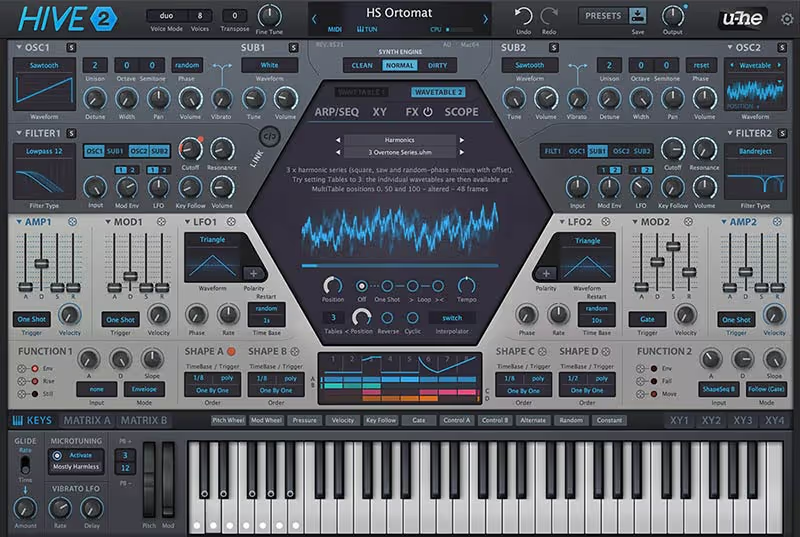
Hive 2

Best for Light Wavetable

Not tested by us, assessed from specs and documented behaviour

The pragmatic choice for a template that is already struggling. It gives up depth and breadth to be the lightest instrument here by a wide margin, which on a large orchestral session decides more than another engine would.

Assessed score
7.9
out of 10

How it scored

  • Sound Match 6.5

    Capable and clean rather than a match for Omnisphere's character.

  • Preset Breadth 6.5

    Adequate, and not why anybody buys it.

  • Footprint 9.8

    Smallest on the page in both disk and CPU.

  • Value 8.8

    99 dollars, and it will still open on a laptop in five years.

Why we picked it

Best for heavy templates and older machines, where headroom decides more than another synthesis engine would.

Who should skip it

Skip it if you want character, because this is built to be efficient rather than distinctive.

The good

  • Lowest CPU on the page
  • Instant load time
  • Fast single-page interface

The bad

  • Less character than rivals
  • Modest preset library
  • Narrower than Pigments
Type
Wavetable and analogue
Footprint
Megabytes
Price
$149
Why it scored that way

The one that does not cost you a track.

Hive answers a question the rest of this page steps around, which is what happens on a session that is already at the edge of what the machine will do. It consumes markedly less CPU than anything else here, loads instantly rather than streaming from disk, and stays out of the way on a template already carrying forty other instruments.

That matters more than it reads. A composer who freezes tracks to keep working is losing time to the instrument rather than to the writing, and swapping a sixty-gigabyte browser for something that opens immediately is a workflow change rather than a saving. Everything is on one page, and the distance from empty patch to usable sound is the shortest here.

What it is not is a character instrument. Diva sounds better on a sustained pad and Pigments goes considerably deeper, and neither of those facts is the point of this entry. Buy Hive if the reason you are leaving Omnisphere is that your machine is unhappy about carrying it, and buy something else on this page if the reason is the sound itself.

Heard on
Large Templates Sketching Live Rigs
Check price $149
Read more →

Methodology

Who is this for

Working composers and producers who need reliability, speed, and character for professional scoring tasks.

Our testing process

Where we have tested a product, we do it in actual production scenarios, ranging from rapid sketches to commercial pitches, and we evaluate it in a dense template rather than in isolation. Where we have not, the product card says so and the assessment is drawn from specifications and documented behaviour instead.

Why you should trust us

We buy most reviewed plugins ourselves. Occasionally we receive NFRs for evaluation, but this never guarantees a review or positive verdict. We may earn commissions from links, but our editorial choices are never for sale.

Also considered

For every category, we audition the top 8 to 15 standard options, discarding any that suffer from poor scripting, slow load times, or uninspiring sampling.

Frequently Asked Questions

What is the closest thing to Omnisphere?

Nothing matches it whole, because it is three instruments in one: a huge preset library, a deep synthesiser and a sampled palette of unusual sources. Pigments replaces the synthesiser, Analog Lab replaces the browsing habit, and no affordable plugin replaces the sampled palette, which is the part genuinely worth its price.

Is Omnisphere worth the disk space?

It depends entirely on whether you use the sample library. At around sixty gigabytes it is one of the largest instruments most templates carry, and if you mainly browse presets or build patches then two hundred dollars and a few hundred megabytes gets you the part you use.

Can I get Omnisphere's sound for free?

Not the sampled palette. The synthesis side is closer than people expect though, and Vital's free tier covers a surprising amount of the same digital territory. Start there before spending, because it costs nothing to establish which half of Omnisphere you actually wanted.

Does Omnisphere still make sense in 2026?

Yes, for the specific composer who uses its sampled sources and its hardware integration. Those remain unmatched. What has changed is that the synthesis and the preset browsing, which is how most people use it, are now covered well by instruments costing a fraction as much.

Written By

The ModWheel Team

The ModWheel editorial team is a collective of composers, producers, and sound designers. We collaborate to bring you comprehensive guides, industry news, and curated lists that represent our shared expertise and passion for music technology.

Related Guides

All Guides →

New reviews, no noise

Occasional email when we publish something worth your time. No daily digest, no vendor press releases.

We store only your address, never sell it, and delete it as soon as you unsubscribe. See our privacy policy.