




The 7 Best Plate Reverb Plugins for Shimmering Vocals

"There is a specific density to a great plate reverb that digital halls simply cannot replicate."

Louis Raveton
By Louis Raveton

Louis works across immersive scores (Venice Biennale, LVMH) and animation (Canal+), while producing Downtempo and Electro-Dub as Monsieur Shwill and Flagada. He treats his sample drive like a record collection, constantly hunting for the perfect 'imperfect' texture

Nothing quite compares to the sound of sound waves crashing against an enormous sheet of suspended metal. The original mechanical plate reverbs, like the legendary EMT 140, gave the music of the 1960s and 70s its signature shimmering density. Today, the best plate reverb plugins capture that distinct, slightly metallic decay perfectly, and they do it without taking up half your studio floor.

When you are struggling to make a lead vocal sit in front of a dense pop or rock track, a plate is almost always the answer. A hall reverb pushes the singer back, while a plate wraps them in a bright, fast-building halo that cuts through a mix. After years of testing countless emulations in professional sessions, I've narrowed down the best vocal reverb choices that provide unparalleled density without muddying the low-mid frequencies. These are the tools that actually work in the trenches.

ModWheel is reader-supported. When you buy through links on this page we may earn an affiliate commission, at no extra cost to you. This never influences which products we recommend, read our testing methodology.

Pick one in 10 seconds

Short version

Compare all 7

Read more →

Methodology

Who is this for

Working composers and producers who need reliability, speed, and character for professional scoring tasks.

Our testing process

Where we have tested a product, we do it in actual production scenarios, ranging from rapid sketches to commercial pitches, and we evaluate it in a dense template rather than in isolation. Where we have not, the product card says so and the assessment is drawn from specifications and documented behaviour instead.

Why you should trust us

We buy most reviewed plugins ourselves. Occasionally we receive NFRs for evaluation, but this never guarantees a review or positive verdict. We may earn commissions from links, but our editorial choices are never for sale.

Also considered

For every category, we audition the top 8 to 15 standard options, discarding any that suffer from poor scripting, slow load times, or uninspiring sampling.

Top Picks

01 Soundtoys

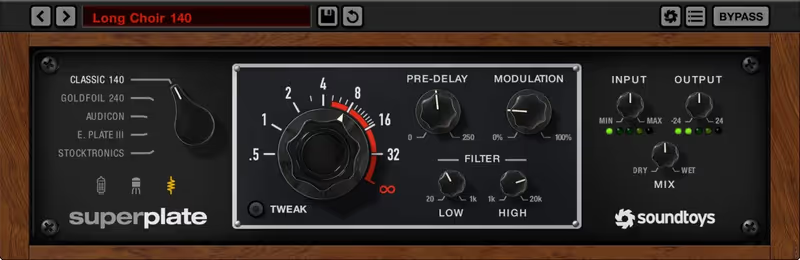
SuperPlate

Best for Lead Vocals

Not tested by us, assessed from specs and documented behaviour

Five plates in one plugin, which is the widest coverage here and the end of the two-knob simplicity people bought Little Plate for.

Assessed score
8.4
out of 10

How it scored

  • Decay Smoothness 8.5

    Documented as the Soundtoys tail, now with the pre-delay it lacked.

  • Plate Character 8.8

    Five modelled units rather than one voice.

  • Workflow Speed 7.0

    Deeper than the plugin it replaces, and priced accordingly.

  • Versatility 9.2

    The broadest remit on this page.

Why we picked it

Best for anyone who wants one plate that covers several classic units rather than a single voice.

Who should skip it

Avoid if the appeal of Little Plate was its two-knob simplicity, since this is a deeper plugin.

The good

  • Covers five plates rather than one.
  • Adds the pre-delay Little Plate lacked.
  • Keeps the Soundtoys character.

The bad

  • We have not tested it in our own sessions.
  • More complex than the plugin it replaces.
  • Notably more expensive than Little Plate was.
Format
VST/AU/AAX
Models
Five modelled plates
Extras
Pre-delay, damping, tone controls
Price
$149
Why it scored that way

The successor to Little Plate, with four more plates behind it.

Our original pick here was Little Plate, which Soundtoys no longer sells. SuperPlate is its replacement in the range and a substantially larger plugin, covering five modelled plates including the EMT 140 and 240 rather than the single voice Little Plate offered. We have not run it through our own sessions yet, so what follows is why the slot still belongs to Soundtoys rather than a claim about the new unit.

Little Plate earned this position by doing one thing perfectly. It was thick, lush and unashamedly metallic, and its infinite decay switch turned a vintage echo into an ambient swell that suited cinematic transitions. Its weakness was the absence of pre-delay and high-end damping. SuperPlate adds both, along with the tone controls that Little Plate deliberately withheld, which addresses the exact criticism we had. If the simplicity was the appeal for you, be aware that the replacement is a more complex plugin.
Heard on
Greg Wells Serban Ghenea Mitch Allan
Check price $149
02 Arturia

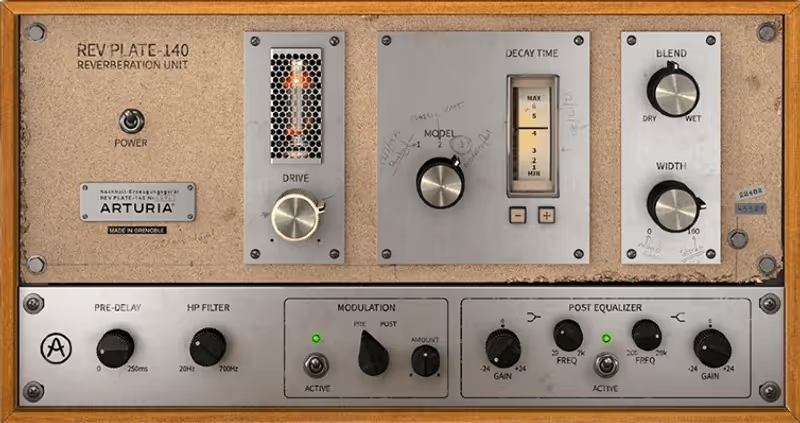
Rev PLATE-140

Best for Vintage Halos

The most musical drive stage attached to a plate here, and a colour you cannot fully switch off.

Tested score
8.3
out of 10

How it scored

  • Decay Smoothness 8.5

    Three modes that stay smooth until the low end is left unmanaged.

  • Plate Character 8.8

    The modelled tube preamp is most of why it sounds like 1965.

  • Workflow Speed 8.5

    Clear panel, quick to place on a vocal.

  • Versatility 7.5

    Pre-delay and chorus help. The vintage colour still limits it.

Why we picked it

Best for indie and vintage production given its incredible modeled tube preamp crunch.

Who should skip it

Avoid if you want a clean, invisible digital reverb.

The good

  • The preamp drive is incredibly musical.
  • Pre-delay and chorus modulation add great modern flexibility.
  • Visually stunning and easy to navigate.

The bad

  • Can easily become muddy if the low end isn't managed.
  • Requires higher CPU than algorithmic verbs.
  • Has a distinct vintage color that doesn't fit ultra-modern pop.
Format
VST/AU/AAX
Models
3 distinct plate modes (Punchy, Classic, Modern)
Preamp
Modeled tube saturation
Price
$49
Why it scored that way

Arturia captures the heavy, mechanical resonance of a real analog plate flawlessly.

Rev PLATE-140 isn't just a generic digital algorithm. It is a physical model of the metal, the pickups, and the tube preamp. You can actually hear the complex, non-linear distortion when you drive the input hard. I constantly use this on acoustic guitars to give them a bright, vintage halo that sits beautifully just behind the master bus. The 'Punch' model in particular is fantastic for rhythmic instruments, reacting brilliantly to sharp transients like tambourines and claps.

Unlike simpler emulations, Arturia includes a fantastic pre-delay section and a beautiful modeled EQ. During a challenging mix for an indie-folk track, the lead vocal was getting buried. By running it through this plugin and pushing the preamp drive, the vocal plate review was a massive success. It added a slightly gritty, harmonically rich tail that totally transformed the track. It is a brilliant, character-filled spatial tool.

Heard on
Abbey Road Studios (hardware) Pink Floyd style mixing Indie Producers
Check price $49 (was $99)
03 Waves

Abbey Road Reverb Plates

Best for Retro Soul

The most historically accurate plate on this list, and the least willing to be anything other than that.

Tested score
7.6
out of 10

How it scored

  • Decay Smoothness 8.8

    Dark, dense tails that sit behind a vocal without effort.

  • Plate Character 9.5

    Modelled from the actual units. Best on this page.

  • Workflow Speed 7.0

    Small GUI, and the modelled noise needs watching across a session.

  • Versatility 5.0

    Heavily coloured and proud of it. Lowest here.

Why we picked it

Best for retro-soul and 60s emulation because it captures the literal hardware from Abbey Road.

Who should skip it

Avoid if you want bright, hyper-extended, modern pop reverbs.

The good

  • Unmatched historical accuracy and vibe.
  • Dark, dense tails that sit perfectly behind the mix.
  • The drive amp adds incredible warmth.

The bad

  • The analog noise can build up on large sessions.
  • The GUI is a bit small on high-res screens.
  • Not versatile. Heavily colored.
Format
VST/AU/AAX
Modes
4 individual modeled Abbey Road plates
Analog
Model noise and hum control
Price
$39
Why it scored that way

This is the exact sound of history. Nothing else has this specific harmonic footprint.

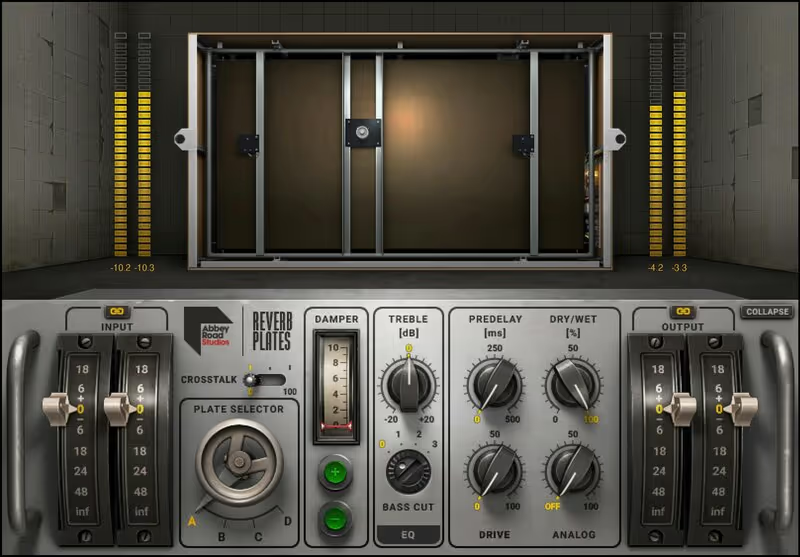
If you want the exact vocal sound of the late Beatles records or classic Pink Floyd, this is it. Waves modeled the four custom plates sitting deep in Abbey Road, capturing not just the metal itself, but the specific amps used to drive them. I reach for this when I want a dark, moody vocal reverb that doesn't scream 'digital.' The harmonic distortion intrinsic to these specific plates wraps around a vocal like a warm blanket, sitting heavily in the track without cluttering the high end.

The interface allows you to dictate exactly how much analog hum and crosstalk you inject into the signal. On a recent retro-soul project, I used Plate B on the main brass section, dialing in some of that 50Hz hum and driving the input amp. It sounded spectacularly authentic. When discussing the best vintage plate vst, this one simply must be in the conversation because nobody else has this specific intellectual property.

Heard on
The Beatles Pink Floyd Radiohead
Check price $39 (was $149)
04 Solid State Logic

SSL PlateVerb

Best for Snare Drum

Not tested by us, assessed from specs and documented behaviour

The cheapest way onto this page and the least interesting once you are on it, which is the right trade for a first plate.

Assessed score
7.3
out of 10

How it scored

  • Decay Smoothness 7.5

    Algorithmic and clean, per the documentation. Not modelled.

  • Plate Character 6.5

    Less colour than the vintage emulations by design.

  • Workflow Speed 9.0

    Decay, pre-delay, damping. Nothing to get lost in.

  • Versatility 6.0

    The essentials only. No deep modulation.

Why we picked it

Best as a first plate because it covers the essential controls at the lowest price in this roundup.

Who should skip it

Avoid if you want deep modulation or an explicitly vintage, coloured character.

The good

  • Lowest price of any plate here.
  • Small, quick control set.
  • Sits back in a mix rather than dominating.

The bad

  • We have not tested it in our own sessions.
  • No deep modulation options.
  • Less character than the vintage emulations.
Format
VST/AU/AAX
Type
Algorithmic Plate
Controls
Decay, pre-delay, damping
Price
$49
Why it scored that way

The cheapest way into a credible plate sound from a name that knows consoles.

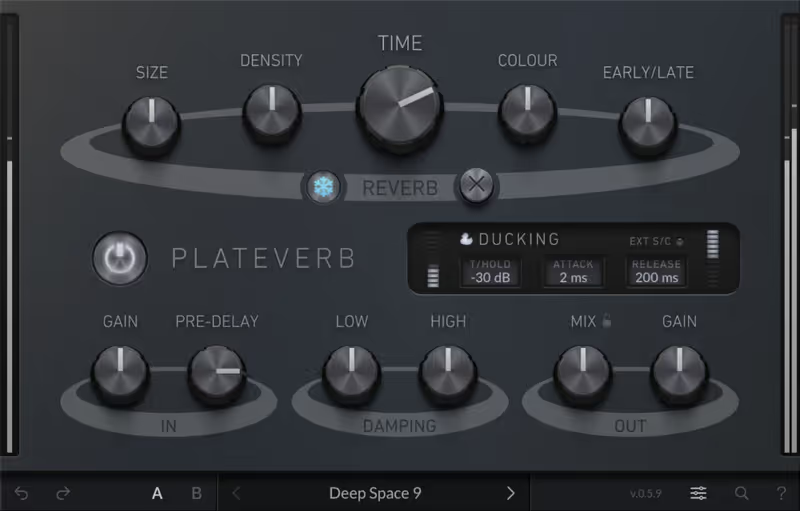
A note on how this pick was made. We have not run PlateVerb through our own sessions the way we did the plugins above, so this entry describes what it is and who it suits rather than claiming bench time we have not put in. It replaces the UAD Pure Plate that previously held this slot, which is no longer sold through the retailers we link to.

What it offers is a compact plate with the controls most people actually reach for, which means decay, pre-delay and damping, without the modulation depth of the FabFilter or Soundtoys options. At its price it sits below almost everything else in this roundup, which makes it the sensible first plate for someone who owns none. SSL's algorithmic reverbs have a reputation for sitting back in a mix rather than pushing forward, and that is the behaviour to expect here.

Heard on
SSL Console Users Project Studios Budget Mixing Rigs
Check price $49
05 Denise Audio

Perfect Plate XL

Best for Modern Production

Not tested by us, assessed from specs and documented behaviour

Built as a modern effect rather than a recreation, which makes it the odd one out here in both directions.

Assessed score
7.1
out of 10

How it scored

  • Decay Smoothness 8.0

    Tail modulation keeps it moving. Documented, not tested by us.

  • Plate Character 6.0

    Deliberately not an EMT. Judge it as its own thing.

  • Workflow Speed 8.0

    Aimed at producers, so the controls are the ones you reach for.

  • Versatility 6.5

    Bright and forward, which orchestral work will often refuse.

Why we picked it

Best for electronic and pop production because it is designed as a modern effect, not a vintage recreation.

Who should skip it

Avoid if you want a faithful EMT 140 emulation, which the other picks here do better.

The good

  • Genuinely different from the EMT clones here.
  • Modulation aimed at movement, not realism.
  • Bright, forward character.

The bad

  • We have not tested it in our own sessions.
  • Not a vintage-accurate emulation.
  • Character may be too modern for orchestral work.
Format
VST/AU/AAX
Type
Modern Plate
Modulation
Built-in tail modulation
Price
$69
Why it scored that way

The one plate here that is not chasing an EMT 140.

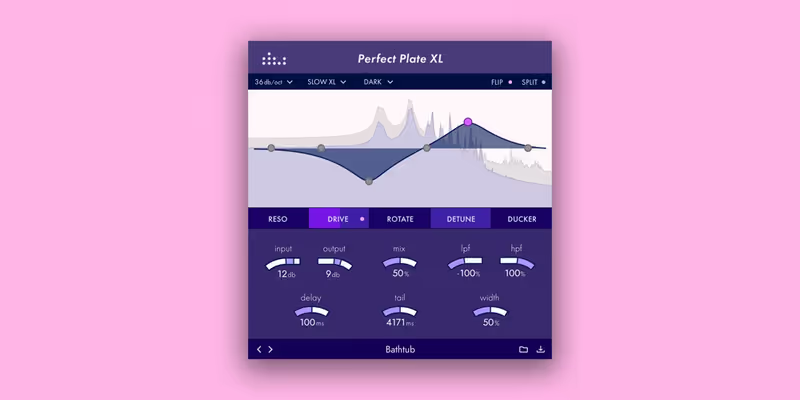
The same caveat applies as above. This is a replacement pick for the PSP Nexcellence that used to hold this slot and is no longer sold through our retailers, and we have not put it through our own testing. We are including it because this roundup was otherwise four variations on the same 1957 German plate, and that is a genuine gap rather than a padding exercise.

Perfect Plate XL is built as a modern effect rather than a period recreation. That means a brighter, more forward character and modulation options aimed at making the tail move rather than at modelling mechanical decay. If your work is electronic or pop rather than orchestral, a plate that is allowed to sound like a plugin is often the more useful tool. If you specifically want the sound of a real steel plate in a basement, the Arturia and Black Rooster entries above remain the honest recommendations.

Heard on
Electronic Producers Pop Mixing Sound Designers
Check price $69
06 UVI

Plate

Best for Sound Design

The smoothest tails on this page, reached through a physics engine that will not let you work quickly.

Tested score
8.1
out of 10

How it scored

  • Decay Smoothness 9.5

    The smoothest decay here, and the reason to tolerate the rest.

  • Plate Character 8.5

    Alloys that never existed. Beautiful, and not an EMT.

  • Workflow Speed 5.5

    Physical parameters interact. Lowest here, and knowingly so.

  • Versatility 9.0

    Endless tweaking, at a real CPU cost on dense material.

Why we picked it

Best for acoustic and ambient sound design because its physics engine allows for impossible, gorgeous metal alloys.

Who should skip it

Avoid if you prefer 'set-and-forget' vintage models.

The good

  • Endless physical tweaking capabilities.
  • Materials sound distinctly different and beautiful.
  • Incredibly smooth decay tails.

The bad

  • High CPU usage on dense material.
  • Can be overwhelming for simple mixing tasks.
  • Takes time to learn how physical parameters interact.
Format
VST/AU/AAX
Engine
Physical Modeling
Materials
Steel, Gold, Silver, Titanium, Aluminum
Price
$79
Why it scored that way

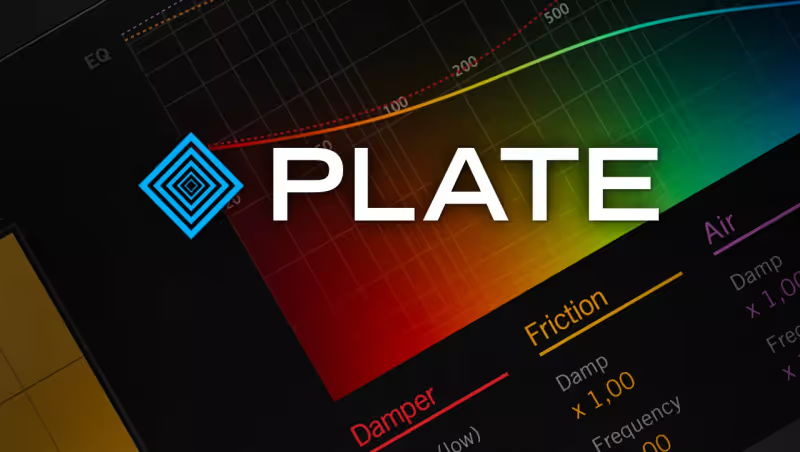
UVI allows you to literally design the physical properties of the metal sheet you are hitting.

UVI’s Plate is a staggering piece of software. It does not just emulate a single piece of hardware. It lets you adjust the physical material, area, and tension of a virtual metal plate. I use this when standard algorithms fail to provide the right resonant frequencies. You can build a plate out of gold or steel, and the decay changes physically. It sounds astonishingly rich. I used a 'custom gold plate' setting on a solo cello recording, and the resulting tail was impossibly smooth, lacking the harsh metallic ringing you get from cheaper algorithms.

The interface is gorgeous and provides real-time visual feedback on the physical resonance. During an ambient electronic mix, I automated the plate tension slowly over a build-up, creating a subtle pitch modulation that made the entire track feel alive and elastic. It is easily the best plate plugin for serious sound designers who demand absolute control over their acoustic physics.

Heard on
Cinematic Composers Foley Artists Ambient Producers
Check price $79
07 Black Rooster Audio

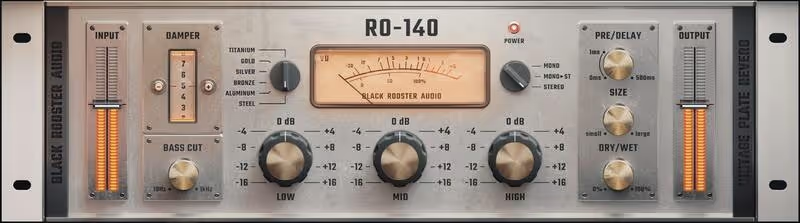
RO-140

Best for Acoustic Drums

The fastest plate here to a biting drum sound, and the one that refuses to give you an endless tail.

Tested score
8.3
out of 10

How it scored

  • Decay Smoothness 8.0

    Physically realistic rather than infinite. Fast transients survive.

  • Plate Character 8.8

    Six materials that genuinely change the tone, plus vintage drive.

  • Workflow Speed 8.8

    Fast and intuitive. Needs a low-cut in a dense mix.

  • Versatility 7.5

    Wide across short plates, absent across long ones.

Why we picked it

Best for rock and acoustic drums because its distinct material models provide biting, fast transients.

Who should skip it

Avoid if you want immense, endless hall-style decays.

The good

  • The material selection dramatically alters tone.
  • Beautiful analog preamp distortion.
  • Fast and intuitive interface.

The bad

  • Decay times are physically realistic, not infinite.
  • The drive can get harsh if pushed recklessly.
  • Requires low-cut EQ for dense mixes.
Format
VST/AU/AAX
Materials
6 different plate materials
Preamp
Modeled vintage input drive
Price
$49
Why it scored that way

Black Rooster delivers authentic, dense plate echoes with a fantastic modeled preamp section.

RO-140 is a phenomenal tool for dialing in vintage space. It beautifully captures the hardware imperfection of the EMT 140 but adds modern flexibility by offering distinct plate materials like gold, silver, and steel. The silver plate setting is my secret weapon for acoustic drums. It has a sharp, bright attack that cuts effortlessly through thick rock guitars without muddying the low end. It feels incredibly fast and responsive, never blurring the transients of the source material.

The magic is in the modeled drive circuit. I recently pushed a dry electric bass through the RO-140, heavily driving the input stage and rolling off the treble. It rounded out the low-end perfectly, adding a subtle three-dimensional width that made the bass massive. If you want a brilliant, characterful delay review alternative that prioritizes vintage crunch, Black Rooster hit it completely out of the park with this one.

Heard on
Vintage Rock Mixes Acoustic Folk Producers Indie Pop Vocals
Check price $49

Frequently Asked Questions

What makes plate reverb different from hall or room reverb?

A plate has no early reflections, because there is no room geometry to produce them, so the tail begins almost immediately and is very dense from the start. That is why plates sit around a source without pushing it backwards the way a hall does.

What is plate reverb best used on?

Vocals, snares and solo instruments that need size without distance. The lack of early reflections means a plate adds sustain and gloss while leaving the source apparently close to the listener.

How much pre-delay should a plate have?

Around 10 to 30 ms on a lead vocal, and often none at all on percussion. Plates were originally used with a separate tape delay for pre-delay, which is why adding a little makes them sound more like the classic records.

Are convolution plates as good as algorithmic ones?

Convolution captures a specific plate accurately but freezes its decay settings, while algorithmic models let you change decay and damping freely. For mixing, the flexibility usually matters more than the exact match.

Written By

Louis Raveton

Louis works across immersive scores (Venice Biennale, LVMH) and animation (Canal+), while producing Downtempo and Electro-Dub as Monsieur Shwill and Flagada. He treats his sample drive like a record collection, constantly hunting for the perfect 'imperfect' texture

Related Guides

All Guides →

New reviews, no noise

Occasional email when we publish something worth your time. No daily digest, no vendor press releases.

We never sell your address. Unsubscribe any time, see our privacy policy.